For many small sellers in the UK, postage is not a background cost anymore. It is part of the business model.
Whether you sell handmade gifts on Etsy, second-hand fashion on eBay, or niche products through Facebook Marketplace and your own website, even a small change in delivery pricing can affect profit margins, customer expectations, and how competitive your listings feel.
That is why the latest Royal Mail price increase matters.
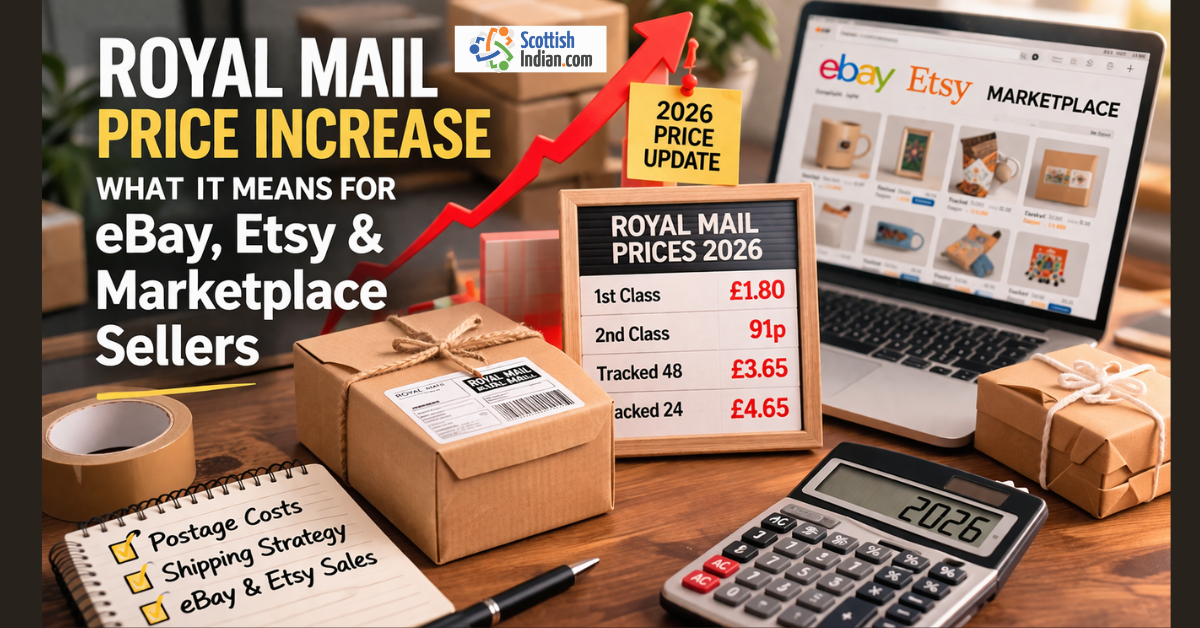
Royal Mail’s current postage prices for 2026 show that everyday sending costs now include 1st Class letters from £1.80, 2nd Class letters from 91p, Tracked 24 from £4.65, and Tracked 48 from £3.65. These prices are listed on Royal Mail’s live prices page. The same page also notes that online prices apply for channels such as eBay, Amazon, and PayPal. Royal Mail also says that price changes for personal customers and marketplace sellers took effect on 7 April 2026.
See also Small Businesses in the UK Are Moving Beyond Business Cards.
For many online sellers, especially those dealing in low-cost items, those changes are not minor. They directly influence how much you charge for delivery, whether you can still offer free shipping, and how attractive your product looks compared with similar listings.
Why this increase matters more to marketplace sellers
Large retailers can often absorb delivery increases more easily because they ship in higher volumes, negotiate stronger courier rates, or spread costs across larger margins.
Small marketplace sellers do not usually have that flexibility.
If you sell a £6 handmade item, a vintage book, a beauty product, or a low-ticket accessory, postage can quickly take a disproportionate share of the sale price. A rise in mailing costs can force you into difficult choices. You either increase your product price, charge more for delivery, reduce your margin, or accept lower competitiveness.
For sellers on eBay and Etsy, this is particularly sensitive because buyers compare listings instantly. A difference of even £1 in total cost can affect whether someone clicks “Buy Now” or moves to another seller.
The pressure on “free shipping”
One of the biggest myths in online selling is that free shipping is actually free.
In most cases, the delivery charge is simply built into the item price. That strategy can still work, but Royal Mail price rises make it harder to maintain. When postage goes up, sellers who already include shipping in their pricing may need to raise item prices, which can make listings appear more expensive in search results.
That creates a visibility problem as well as a margin problem.
A product that once looked attractively priced may suddenly appear less competitive, even if the increase is only there to cover mailing costs.
You can read more in Understanding the United Kingdom’s Economy
Tracked services are now even more important
At the same time, many online sellers cannot easily move away from tracked delivery.
Tracked options help protect against disputes, lost-item claims, and buyer complaints. They also provide proof of posting and more reassurance for both seller and customer. Royal Mail’s published UK and international service prices show Tracked 24 from £4.65 and Tracked 48 from £3.65, which means sellers using these services need to calculate costs very carefully, especially on lower-value goods.
For some businesses, tracked postage is not optional anymore. It is part of maintaining trust.
That means the conversation is no longer only about “how much does postage cost?” It is also about “how much risk can a seller afford?”
International sellers face another layer of cost pressure
For sellers shipping internationally, the issue is even bigger.
Royal Mail’s current prices list International Standard from £3.40 for letters, International Tracked from £8.10, International Tracked & Signed from £8.50, and International Standard parcels from £6.60. Royal Mail has also announced that from 3 May 2026 its International Surcharge will rise from 6.5% to 12%.
That matters for Etsy sellers and other independent traders who rely on overseas buyers. A higher international mailing cost can discourage purchases, particularly for products that are lightweight but not high-value enough to absorb expensive shipping.
For many small brands, international buyers have helped them scale. But when delivery costs rise too quickly, cross-border growth becomes harder to sustain.
If you sell to Northern Ireland, admin matters too
Some sellers are also dealing with more than just price changes.
Royal Mail states that, under the Windsor Framework, extra data requirements came into effect on 1 May 2025 for parcels containing goods sent from Great Britain to Northern Ireland. The information required depends on whether the parcel is business-to-consumer, consumer-to-business, or business-to-business.
For marketplace sellers, that means fulfilment is no longer just about packing an item and printing a label. In some cases, shipping now involves more data entry and more room for delays if the required information is incomplete.
So the real burden on sellers is often a combination of higher cost plus higher admin.
Royal Mail’s wider pressures are part of the story
Ofcom has said that the number of letters being sent has halved over the past decade and continues to decline, which drives up unit costs and puts pressure on the sustainability of the postal service. Ofcom has also noted Royal Mail’s financial losses in recent years and has argued that the universal postal service needs to modernise.
That does not make rising costs easier for small sellers, but it does explain why price increases keep returning as a business reality.
For marketplace sellers, the key lesson is simple. Delivery pricing is no longer something you review once a year. It now needs regular attention.
What small sellers should do now
The first step is to review your packaging and postage setup properly.
Many small sellers still underprice shipping because they estimate informally rather than calculating exact parcel size, weight band, packaging cost, labels, tape, and time. With Royal Mail prices higher than before, guesswork becomes more expensive.
The second step is to separate your products into categories:
1. Low-margin items
These are the products most vulnerable to postage increases. You may need to raise the item price, bundle products together, or stop offering them individually if shipping eats too much of the margin.
2. Medium-value items
These can often absorb a better delivery method if the customer sees enough value in the purchase. This is where pricing psychology matters. A £20 item with reliable delivery feels more reasonable than a £6 item with a heavy postage charge.
3. High-risk items
Products that are fragile, time-sensitive, or more likely to attract delivery disputes may justify tracked services even if they cost more.
The era of “cheap postage” is fading
For many UK marketplace sellers, the bigger message is this: low-cost fulfilment can no longer be taken for granted.
What used to be manageable as a side hustle now requires more structured pricing decisions. Many people started selling online casually, listing items from home, posting handmade products, or building a micro-business in evenings and weekends. But repeated postal cost increases push even small-scale sellers toward more serious operational thinking.
That means:
- reviewing margins more often
- rethinking free shipping
- deciding when tracked delivery is essential
- checking where customers are based
- and building postage costs into the business model from the start
There is another way to look at this.
Rising postage costs create pressure, but they also push sellers to become more disciplined. Businesses that understand their numbers, package efficiently, communicate clearly with buyers, and price confidently are more likely to survive than those still relying on rough estimates.
The sellers most likely to cope are the ones who stop treating postage as a minor admin task and start treating it as a core part of online selling strategy.
For eBay, Etsy, and marketplace sellers across the UK, Royal Mail’s latest price increase is more than an inconvenience. It affects visibility, margins, buyer trust, and long-term viability.
And for many small sellers, especially those from migrant, family-run, or side-hustle backgrounds, that impact is personal. A few pounds extra in delivery costs each week may not sound dramatic on paper. But across dozens or hundreds of orders, it changes the economics of selling online.
If you sell online, review your postage strategy now. Because shipping is no longer just the final step in the sale. It is one of the main factors shaping whether the sale still makes sense.