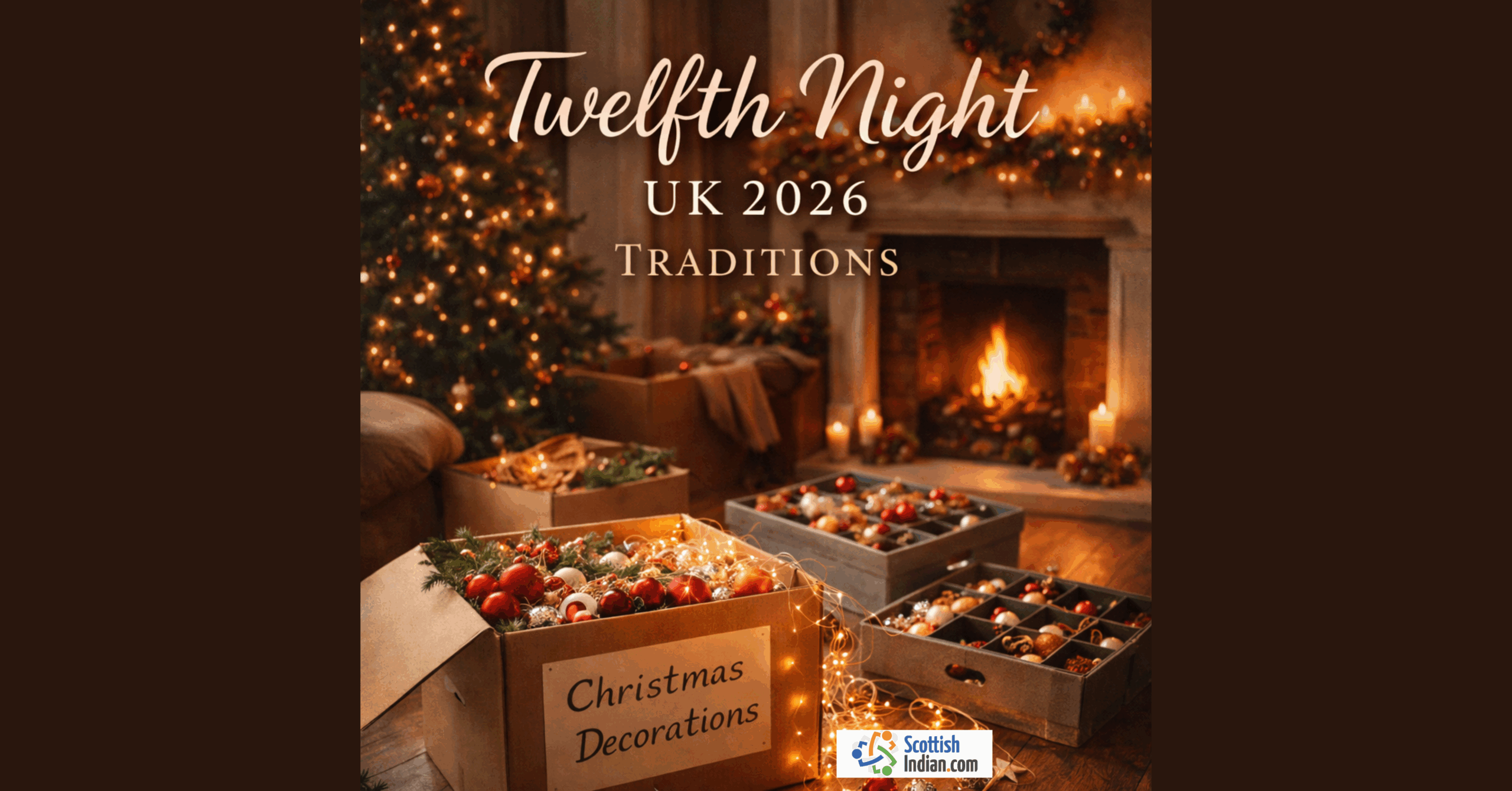
In the UK, Twelfth Night marks a significant point in the winter calendar, the evening of 5 January, which traditionally closes the twelve days of Christmas. While Christmas Day and Hogmanay (New Year’s Eve) are household names, Twelfth Night carries its own cultural weight, rooted in history, folklore, and community tradition. It’s a day of reflection, festive rituals, symbolic endings, and, yes! celebratory cakes shared among family and friends.
Though not a public holiday, Twelfth Night has been woven into British tradition for centuries. Many regions still observe certain customs, others adapt them with modern twists, and in many homes it’s simply the last festive night before everyday routines resume.
Origins of Twelfth Night
The term “Twelfth Night” comes from the Christian tradition marking the twelfth night after Christmas Eve (24 December). This period, the twelve days of Christmas was once celebrated widely across Europe with feasting, singing, and gatherings. The twelfth night became symbolic of endings and revelations:
- In medieval Britain, it was the night before Epiphany (6 January) — the feast commemorating the visit of the Magi to the infant Jesus, also called Three Kings’ Day.
- In some European cultures, it signalled the moment when holiday revelry culminated in special food, performances, and mischief.
The name was immortalised in English literature by William Shakespeare’s comedy “Twelfth Night”, a play that explores themes of disguise, celebration, and upheaval, fitting symbols for a night that marked a turning point in the year.
For readers exploring how seasonal traditions still influence modern Britain, our coverage of Scottish winter festivals and diaspora celebrations offers more cultural context. You can find it here.
How Twelfth Night Was Traditionally Observed
Historic customs varied from region to region, but many shared themes of fun, symbolism, and community:
1. Taking Down Decorations
In many British households, Twelfth Night was the deadline for removing Christmas trees, wreaths, lights, and green boughs.
It was thought unlucky to leave decorations up past this night, as if clinging to Christmas too long might disrupt the natural flow of the year.
In Scotland, this timing intersects closely with Edinburgh’s winter calendar. Many residents and travellers also explore other after-dark attractions before the final Christmas lights come down, including Edinburgh’s Christmas at the Botanics. A magical light trail.
This tradition of take-downs also echoes a broader truth about night work in Britain, where essential labour continues after dark while others sleep. If you are interested in how Scotland’s night-time workforce sustains seasonal events, read Working night shifts in the UK. A migrant and student perspective.
2. Feasting and ‘King Cake’ Traditions
A special sweet bread or cake often called Twelfth Cake or King Cake was baked for the occasion.
A small trinket or bean might be hidden within, and the person who found it was dubbed “king” or “queen” of the feast.
Though not uniquely British, this custom was widely celebrated across Europe and found its way into many British kitchens.
3. Wassailing and Song
Groups of singers, known as wassailers, traditionally went from house to house with songs, good wishes, and sometimes a cup of spiced ale or cider called wassail.
This was both a blessing and a celebration of community camaraderie.
4. Misrule and Merriment
In some regions, the Twelfth Night marked a time of festive reversals and masters served by servants, practical jokes, and playful social mischief. This reflected the “topsy-turvy” spirit often associated with year-end celebrations.
Modern Twelfth Night in the UK
Today, Twelfth Night is less formal and more flexible. Many people no longer follow the old customs strictly, but traces remain in family habits and cultural awareness:
- Families may take down Christmas trees and lights on or around 5 January — a practical tradition many still observe.
- Bakeries and home cooks might bake a King Cake or festive dessert to share on the evening.
- Churches hold Epiphany services and carol reflections on Twelfth Night or the following day.
- Some communities feature theatre performances, storytelling, or local gatherings inspired by the spirit of the season’s close.
For cultural and travel inspiration related to Scotland’s winter calendar — including light trails, festive events, and heritage walks — VisitScotland’s official site offers seasonal guides and event listings.
For Scottish Indian families and diaspora communities across the UK, Twelfth Night can feel familiar in spirit. The idea of ceremonial food, family gatherings, and symbolic closures resonates with many Indian festival traditions that celebrate endings, blessings, and community meals. Some families blend traditions like sharing festive cakes alongside Indian sweets, or hosting informal dinners that mix cultural flavours.
Whether you grew up with Twelfth Night stories or you’re discovering it as an adult in Scotland, the night offers a moment of reflection before routines fully resume.
A Symbolic Close to the Festive Season
The 12th Night of Christmas in the UK isn’t about pageantry or spectacle. It’s about recognition of endings, transitions, and shared moments. It’s the day when decorations come down, candles burn a little lower, and the last crumbs of fruit cake are shared among smiles.
Twelfth Night connects the ancient and the everyday. It bridges medieval feasts and modern family living rooms. It reminds us that celebration is as much about conclusion as it is about beginning.