If you’ve shopped at Sainsbury’s recently and noticed that many fresh fruits and vegetables no longer have “best before” dates, you’re not imagining things. The supermarket giant, along with others like Tesco and Marks & Spencer, has quietly removed those familiar labels from much of its produce.
But here’s the twist, there is still a way to tell how fresh your food really is. You just need to know how to read the hidden freshness codes printed on the packaging or stickers.
Welcome to the secret world of Sainsbury’s hidden food codes. Your new best friend in the fight against food waste (and for saving money!).
Why Sainsbury’s Removed “Best Before” Dates
In 2022, Sainsbury’s joined a growing list of UK supermarkets removing best-before dates from certain products like apples, potatoes, broccoli, and cucumbers.
The reason? To reduce food waste.
According to WRAP (Waste and Resources Action Programme), an estimated 70% of all UK food waste happens in households, much of it because people throw away items that are still perfectly good just because the label said “best before.”
The “best before” date was never about safety; it simply indicated peak quality. Removing it encourages shoppers to use their judgement like checking the look, feel, and smell of produce instead of relying on arbitrary dates.
Sainsbury’s estimated that this simple change could help save millions of tonnes of edible food every year. Tesco, Co-op, and M&S have made similar moves.
To understand how everyday habits are changing for consumers, read our blog on Finance, a guide to navigating the UK’s cost-conscious lifestyle.
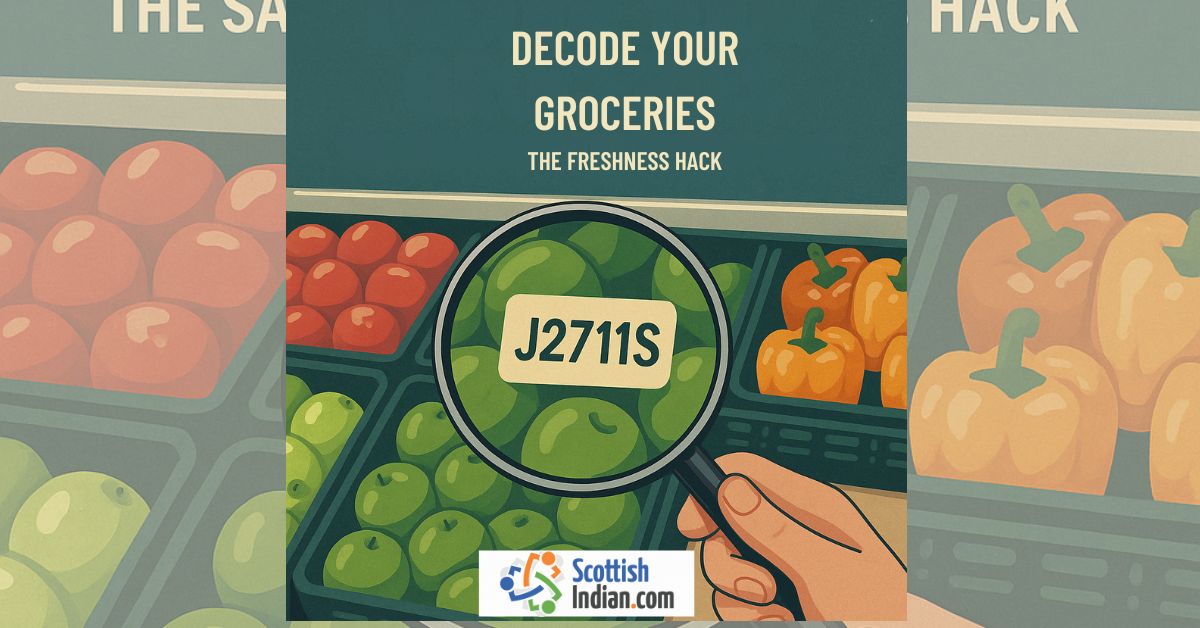
The Secret Code: What “J2711S” Really Means
Now for the fun part, is the, hidden system!
You might spot codes like J2711S or J1509S on fruit and veg packaging.
They look random, but there’s actually a pattern:
- The first letter (J) and last letter (S) frame the code. They stand for internal logistics information (likely Sainsbury’s batch ID).
- The numbers in between tell you the date the produce was packaged or delivered.
Here’s how to read it:
👉 Example: J2711S
- 27 = Day
- 11 = Month (November)
So, this item was packaged or stocked on 27th November.
That means the further away that date is from today, the fresher the product will likely be.
It’s not confirmed whether this represents the exact packing date, delivery date, or a batch date, but it’s a reliable guide to help you spot what’s just arrived on the shelf.
How This Change Helps Reduce Food Waste
By removing best-before labels and using discreet date codes, supermarkets are helping consumers think more sustainably.
Instead of automatically discarding a bag of spinach that’s “past date,” shoppers are encouraged to check freshness manually.
This shift could have a huge impact:
- Reduces unnecessary household waste
- Cuts carbon emissions from discarded food
- Saves shoppers money
- Helps supermarkets operate more flexibly and restock efficiently
As WRAP notes, if UK homes stopped throwing away edible food, it would save £14 billion a year and prevent 36 million tonnes of greenhouse gases. That’s no small change!
How to Use Sainsbury’s Hidden Food Codes to Save Money
If you’re trying to shop smarter during the cost-of-living crisis, decoding these labels can make a real difference. Here’s how to use them:
- Check the code before you buy.
Look for the freshest date (the highest or most recent number). That bag of apples with “J0212S” will last longer than one marked “J2811S.” - Buy what you’ll actually use.
The new system encourages mindful shopping. Pick what fits your weekly plan to reduce spoilage and spending. - Store food properly.
Keep fruit and veg in breathable bags or fridge drawers. Use Love Food Hate Waste or Good Food To Go for excellent storage advice. - Don’t fear “ugly” produce.
Slightly imperfect items often last just as long and are often discounted, check the reduced section! - Know the difference between “best before” and “use by.”
Best before relates to quality; use by relates to safety (important for meat, fish, and dairy).
Smarter Shopping, Greener Living
Sainsbury’s hidden food codes might sound like a quirky secret, but they’re part of a bigger shift toward conscious consumption.
It’s not just about reading numbers. It’s about changing habits.
By paying attention to freshness instead of fixed dates, we can waste less, save more, and make small, meaningful choices that benefit the planet.
And next time you’re in the produce aisle, impress your friends by spotting the freshest batch of bananas just by decoding that tiny label. No app or guesswork required.
For more practical lifestyle advice and eco-friendly ideas, explore our Sustainable UK Living and Moving & Settling in the UK categories.